Water Check Card
Need the short version? Chem Card ↓Typical targets only. Shock doses depend on your pool size, stabilizer level and product, so follow your test kit and labels.
The worst monsoon storm I have seen at this house rolled in on an August evening. The sky went brown, then black. Wind tore through the yard for twenty minutes, and the rain came sideways. The power went out around nine and stayed out until morning. My dog spent the night under the bed.
When I walked outside the next day, the pool looked like iced tea with a green tint. Leaves, palo verde twigs and a layer of fine dust covered the floor. The pump had been off for ten hours in 100-degree heat. By that afternoon the green had deepened. I have learned since then that the first day matters most. Here is how I handle the first 24 hours after a storm now.
Why storms turn pools green so fast
A pool can go from clear to green in a day or two after a big storm. It feels sudden, but several things are happening at once.
- Chlorine gets used up. Leaves, dirt, pollen, bird droppings and runoff all carry organic material. Chlorine reacts with all of it. Free chlorine can drop close to zero overnight.
- Rain dilutes the water. Heavy rain adds water with no sanitizer and can lower chlorine, alkalinity and stabilizer levels. It can also shift pH.
- Algae spores arrive. Wind and rain blow algae spores into the pool. With low chlorine and warm water, they have perfect conditions.
- Circulation stops. Power outages, tripped breakers or clogged baskets stop the pump. Still water lets algae settle and grow.
- Phosphates and nutrients. Runoff from lawns and garden beds can carry fertilizer and other nutrients that algae feed on.
- Heat and sun. In summer, warm water speeds algae growth and sunlight breaks down chlorine faster.
In the desert we add dust to that list. Monsoon dust storms can drop a surprising amount of fine grit. It clouds the water, clogs filters and gives algae a place to start.
The fix, in order
Test first, add chemicals second. After a storm, though, the very first step is not chemistry. It is safety.
- Check safety before anything else. Wait until lightning has passed. Look at the equipment pad for standing water, fallen branches or damaged wiring. If any equipment was submerged or looks damaged, keep the power off and call a licensed pro. Do not touch electrical equipment while standing in water.
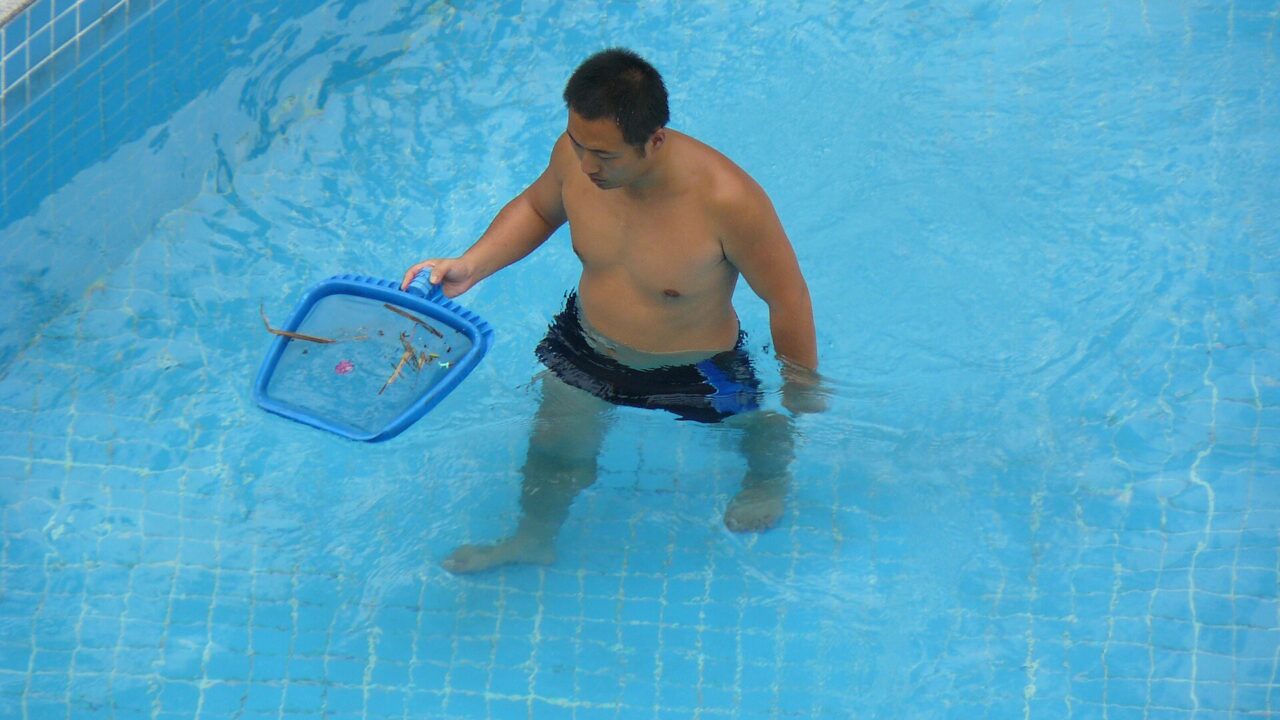
- Remove debris by hand. Use a leaf net or leaf rake to pull out leaves, twigs and big debris. Empty the skimmer and pump baskets, with the pump off. Removing debris first means chlorine is not wasted on it later.
- Lower the water if it is too high. If rain pushed the level above the skimmer opening, the skimmer cannot work well. Lower the water to around mid-skimmer, using the filter’s waste setting or a submersible pump. Follow local rules about where to drain pool water.
- Restart the pump and keep it running. Once the equipment checks out, start the pump and run it around the clock. Circulation is your best friend until the water is clear.
- Test pH, free chlorine and stabilizer. Test with a reliable kit. Cyanuric acid, or stabilizer, matters because higher levels mean you need more chlorine for the same effect. Write the numbers down.
- Bring pH into range. If pH is high, lower it toward 7.2 to 7.6 before shocking. Chlorine works much better in this range. Add products to the water, following the label, and let the pump mix them.
- Shock at dusk. Add shock in the evening so the sun does not burn it off. Dose according to the label for algae treatment, your pool volume and your stabilizer level. Pour it in front of a return with the pump running.
- Brush, clean the filter and retest in the morning. Brush the walls, floor and steps the next morning to break up algae. Check filter pressure and clean or backwash if it has risen. Retest chlorine. If it has dropped a lot, the algae is still consuming it, so add more and keep going.
Read nextPool Water Cloudy After Shocking? Fix It in This Order
Your first 24 hours at a glance
I keep this timeline on a note in my phone for storm season. It helps me remember what to do when I am tired and frustrated.
| Time | What to do | Why it matters |
|---|---|---|
| Right after the storm | Safety check of power and equipment | Storm damage can make equipment unsafe |
| First hour | Net out debris, empty baskets, lower high water | Less debris means less wasted chlorine |
| Hours 1 to 3 | Restart pump, test pH, chlorine and stabilizer | Know where you stand before adding chemicals |
| Late afternoon | Adjust pH toward 7.2 to 7.6 | Chlorine works better at lower pH |
| Dusk | Shock per label for algae | Overnight lets chlorine work without the sun |
| Next morning | Brush, check filter, retest chlorine | Tells you whether to add more shock |
Mistakes I made after my first big storm
- Vacuuming heavy debris through the filter. I clogged my filter in an hour. Now I net the big debris and vacuum to waste if my system allows it.
- Shocking at noon. Half my shock disappeared in the sun. Dusk works much better.
- Not testing stabilizer. My chlorine dose was too low for my stabilizer level. The algae won the first round.
- Waiting a day to start. I thought the water might clear on its own. It got greener. Early action is easier than a full recovery.
- Adding algaecide instead of chlorine. Algaecide can help prevent algae, but chlorine is what clears an active bloom. Use algaecide only as the label directs, usually after the water clears.
- Restarting before checking the equipment pad. I got lucky that night. Since then I always look first.
Algaecide, clarifier or phosphate remover?
The pool store shelf is full of bottles that promise to help after a storm. Most of them have a place, but not in the first few hours.
- Algaecide. Useful as a follow-up once chlorine has cleared the bloom. Some types can foam if overdosed. Read the label and never mix it with shock in a bucket.
- Clarifier. Helps the filter catch fine particles once the algae is dead. It does not kill anything on its own.
- Phosphate remover. Some owners use it after runoff from lawns or gardens. It can temporarily cloud the water and load the filter. Chlorine still does the main work.
My rule is simple. Chlorine and filtration come first. Extras come later, one at a time, only if testing shows a reason.
Before the next storm
A little prep before storm season saves a lot of work afterward. These are my habits from June through September.
- Keep chlorine on the higher end of your normal range when storms are forecast. Do not exceed what your product labels allow.
- Check the water level before a big storm. If it is already high, lower it a little.
- Bring in loose patio cushions, toys and umbrellas so they do not blow into the pool.
- Trim branches that hang over the pool.
- Keep extra shock, a fresh test kit and a spare skimmer basket on hand.
- Know where your breakers are and how to shut the pool equipment off quickly.
How long until the pool is clear?
A light green tint caught early often clears within a day or two of shocking and filtering. A darker green pool can take several days of keeping chlorine high, brushing and cleaning the filter. Dead algae often turns the water gray or cloudy before it clears. That is normal, and it means the chlorine is winning.
Once the water is clear, test again before swimming. Chlorine should be back within the range on your product labels. You should be able to see the main drain clearly. Then keep up with daily testing for a few days to make sure the algae does not return.
When to call a pool pro
- The equipment pad flooded or you see storm damage to wiring, timers or the pump.
- A breaker keeps tripping when you restart the pump.
- The pool is very dark green or black and you cannot see the bottom.
- Chlorine keeps disappearing after several days of shocking.
- A tree or heavy branch hit the pool and you suspect structural damage to the shell, deck or liner.
FAQ
Is it safe to swim in a pool after a storm?
Not until you test the water and it is clear. Storms bring in contaminants and can drop chlorine to unsafe levels. Wait until chlorine is in range and you can see the bottom.
Should I drain the pool after a big storm?
Usually no. Lower the water only if the level is too high. Draining a pool fully can damage it and should be left to a pro.
How much shock does a green pool need?
It depends on your pool size, how green it is and your stabilizer level. Follow the label’s algae treatment dose and retest the next morning to see whether you need more.
Why did my pool turn gray after shocking?
Dead algae often turns the water gray or cloudy. Keep the pump running, brush and clean the filter. It usually clears over the next day or two.
Chem Card
Green after a storm: 30-second version
- Check equipment and power safely before restarting.
- Net debris, empty baskets and lower high water.
- Run the pump nonstop and test pH, chlorine and stabilizer.
- Bring pH toward 7.2 to 7.6, then shock at dusk.
- Brush, clean the filter and retest the next morning.
About Renee Callahan
Renee Callahan has looked after her own in-ground pool and hot tub through more than a dozen hot Arizona summers. She writes test-first, least-chemical fixes for pool owners who would rather understand their water than keep guessing at the store. Read Renee's story