Water Check Card
Need the short version? Chem Card ↓Pressure numbers and settings vary by pump and filter. Your equipment manual is the best guide for your system.
I got home from a weekend away and heard the pump running before I even opened the side gate. That sound usually makes me happy. But when I walked up to the pool, the return jets were dead still. The waterfall had a thin trickle. The pump was spinning its heart out and moving almost nothing.
A monsoon storm had blown through while I was gone. The skimmer basket was packed solid with palo verde blossoms and grit, and the pump basket behind it was half full of air. It took me twenty minutes to fix, and most of that was cleaning. Not every no-flow problem is that simple, but most start in the same few places. This is the order I check them.
Why a running pump can stop moving water
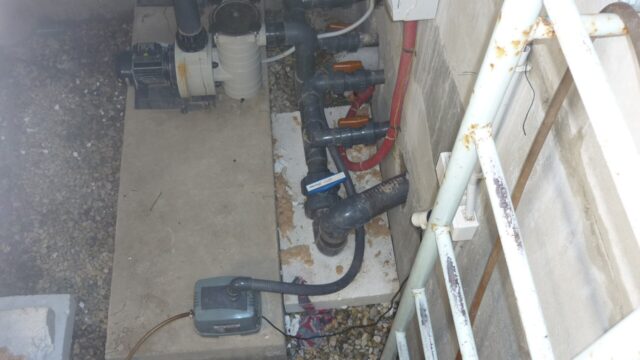
A pool pump needs a steady supply of water on the suction side. It also needs a clear path back to the pool on the return side. When either side gets blocked, or air gets in, flow drops. The motor can keep running the whole time, which is why this problem fools people.
Here are the most common causes I have run into or seen in friends’ pools:
- Low water level. If water drops below the skimmer opening, the pump pulls air instead of water. Evaporation in hot, dry weather can lower the level fast.
- Clogged baskets. A full skimmer basket or pump basket chokes the suction side. Leaves, pine needles, dust storms and pool toys are frequent culprits.
- Lost prime. If air gets into the pump, it may stop moving water until it is refilled. The pump lid looks foamy or empty.
- Air leaks on the suction side. A dry or worn lid O-ring, a loose drain plug or a leaky fitting before the pump can let air in.
- Closed or half-closed valves. Someone may have turned a valve while cleaning or adjusting a water feature. A multiport valve stuck between settings can also block flow.
- A clogged impeller. Small debris can pass the pump basket and jam the impeller vanes. Flow drops even though everything else looks fine.
- A dirty filter. A heavily loaded filter restricts the return side. Pressure climbs and flow falls.
- Blocked suction lines. A toy, a ball or a wad of debris can get lodged in a skimmer line or main drain line.
The fix, in order
I start with the easy checks that need no tools. Each one rules out a common cause before you go deeper.
- Turn the pump off. Shut it off at the timer or control, and at the breaker before you open anything. A pump running dry can overheat and damage its seal and housing. Give it a few minutes to cool if it feels hot.
- Check the water level. Many pools run best with water around the middle of the skimmer opening. If it is low, top it off with a hose before going further. The pump cannot move water it cannot reach.
- Empty the skimmer and pump baskets. Pull the skimmer basket and clear it. Then, with the power off, open the pump lid and clean that basket too. Look for splits in the baskets. A damaged basket lets debris through to the impeller.
- Look at every valve. Confirm the skimmer, main drain and return valves are open. On a multiport valve, set it firmly to Filter, but only with the pump off. Moving a multiport handle while the pump runs can damage the valve’s internal gasket.
- Check the lid O-ring and reprime. Wipe the lid O-ring clean and inspect it for flat spots or splits. Lubricate it only with a product the pump maker recommends. Fill the pump pot with water from a hose, close the lid snugly, and restart. Many pumps take a minute or two to catch prime.
- Read the filter pressure. Compare it to the reading you see right after a clean filter. If pressure is much higher than normal, clean or backwash the filter. If pressure is much lower than normal, the problem is usually on the suction side, before the pump.
- Check the impeller for debris. With the breaker off, reach carefully into the pump through the basket opening, if your manual allows it. Feel for leaves, seed pods or small stones stuck in the impeller eye. Some pumps need partial disassembly to reach it. If yours does, follow the manual or call a pro.
- Hunt for air leaks. With the pump running, watch the lid for bubbles. Check the drain plugs, unions and threaded fittings before the pump for hissing or dripping. A bit of shaving cream spread over a suspected joint can show whether it pulls inward.
Read nextPool Water Cloudy After Shocking? Fix It in This Order
What filter pressure is telling you
Your filter gauge is one of the best troubleshooting tools you own. Write your clean-filter reading on a piece of tape near the gauge. I did that years ago and still look at it every week.
| Pressure reading | Flow at returns | Most likely area |
|---|---|---|
| Much higher than clean | Weak | Dirty filter or a blocked return line |
| Much lower than clean | Weak | Suction side: baskets, water level, impeller, air leak |
| Near zero | None | Lost prime, very low water, or a fully blocked suction line |
| Jumping up and down | Surging | Air entering the system on the suction side |
| Normal | Weak at one return | A blocked or misadjusted return fitting |
Gauges can fail too. If the needle never moves at all, even during a restart, the gauge itself may be stuck. Replacement gauges are inexpensive and easy to swap with the power off and the system depressurized.
Mistakes that make flow problems worse
- Letting the pump run dry for hours. It can melt the pump basket area or damage the shaft seal. If flow stops, shut the pump off first.
- Turning the multiport with the pump on. This can tear the spider gasket inside, which creates new leaks.
- Over-tightening the pump lid. Hand-tight is usually enough. Forcing it can warp the lid or pinch the O-ring.
- Using petroleum jelly on O-rings. Many pump makers warn against it because it can swell some rubber. Use the lubricant your manual names.
- Ignoring a split basket. Debris that slips past a damaged basket ends up in the impeller.
- Forgetting the water level in summer. Here in Arizona, the pool can lose a surprising amount of water in a hot, windy week. I check the skimmer level every morning when I let the dog out.
Variable-speed pumps have their own quirks
My variable-speed pump runs most of the day at a low speed. That saves energy, but low speeds can struggle to pull water through a dirty filter or a half-clogged basket. If flow looks weak, try a higher speed briefly to see if it improves. Many variable-speed pumps also have a priming speed at startup. Check your manual for how long it runs and whether it can be adjusted.
Some variable-speed pumps show error codes for loss of prime or overheating. Write down any code before resetting. It helps you, and it helps a technician if you need one later.
My five-minute weekly flow check
Most of my flow problems now get caught early because of a short routine. I do it on Sunday mornings while the dog patrols the yard.
- Look at the water level against the skimmer opening.
- Empty the skimmer basket, and the pump basket if it looks more than a quarter full.
- Glance at the pump lid. It should be full of water with no steady stream of bubbles.
- Read the filter gauge and compare it to my clean reading on the tape.
- Hold my hand in front of a return to feel the push of the water.
If anything feels different from last week, I deal with it then. A small change caught early is much easier than a dead pump on a 110-degree afternoon.
When to call a pool pro
- You still have no flow after clearing baskets, opening valves and repriming.
- You suspect a blocked or leaking underground line.
- Water is dripping from the pump motor end, which can mean a failing shaft seal.
- The motor hums, smells hot, trips the breaker or shows an error you cannot clear.
- You need to open the pump housing and your manual says it requires a technician.
FAQ
How long does it take a pool pump to prime?
Many pumps catch prime within a few minutes once the pot is full and the suction side is clear. Check your manual for the expected time. If it takes much longer, look for air leaks or blockages.
Can a dirty filter stop water flow completely?
A very dirty filter can reduce flow badly, and pressure will usually read high. It rarely stops flow completely on its own, so check the suction side too.
Why is there air in my pump basket?
Air usually means a leak on the suction side, a low water level, or a worn lid O-ring. A few tiny bubbles can be normal right after priming.
Is it bad to run the pump with no water flow?
Yes. Running dry can overheat the pump and damage the seal and plastic parts. Turn it off as soon as you notice the problem.
Chem Card
No pump flow: 30-second version
- Turn the pump off at the control and the breaker.
- Top up the water to mid-skimmer.
- Empty the skimmer and pump baskets.
- Open all valves and set the multiport to Filter with the pump off.
- Fill the pump pot, seal the lid and restart to reprime.
About Renee Callahan
Renee Callahan has looked after her own in-ground pool and hot tub through more than a dozen hot Arizona summers. She writes test-first, least-chemical fixes for pool owners who would rather understand their water than keep guessing at the store. Read Renee's story